
Value Analysis Governance in Healthcare:
Building Audit-Ready Decision Processes
Value Analysis Governance in Healthcare: Building Audit-Ready Decision Processes
Healthcare value analysis has always required discipline, but the level of scrutiny surrounding healthcare decision-making has increased dramatically.
Hospital executives, finance leaders, compliance officers, and boards are asking more questions about how product decisions are made and how savings claims are validated. In this environment, healthcare value analysis programs must operate with a level of governance and documentation that goes far beyond informal committee processes.
Decisions must be transparent.
Evidence must be traceable.
Outcomes must be measurable.
This is where governance becomes essential.
Governance ensures that healthcare value analysis operates as a structured, accountable discipline rather than a collection of disconnected evaluations.
Why Governance Matters in Healthcare Value Analysis
Healthcare value analysis decisions influence:
-
- patient safety
- clinical practice
- supplier relationships
- operational performance
- financial outcomes
Because these decisions carry significant consequences, organizations must ensure that the evaluation process remains consistent and defensible.
Governance establishes the framework that guides how value analysis operates across the organization.
It defines:
-
- who participates in decisions
- how requests are evaluated
- what evidence must be reviewed
- how approvals are documented
- how outcomes are measured
Without clear governance, healthcare value analysis programs can drift toward inconsistency, making decisions difficult to explain or defend later.
The Growing Importance of Audit Readiness
Healthcare organizations today operate under increasing financial pressure and regulatory oversight.
Leaders are asking important questions about healthcare value analysis initiatives:
-
- Why was a product approved or rejected?
- What alternatives were evaluated?
- What clinical evidence supported the decision?
- Who participated in the evaluation?
- Were projected savings realized?
- Was the decision applied consistently across departments?
Programs that rely on scattered documentation often struggle to answer these questions quickly.
Audit-ready healthcare value analysis programs operate differently.
They embed documentation, decision tracking, and outcome measurement directly into the workflow so that every decision remains traceable over time.
From Informal Processes to Structured Governance
Many healthcare value analysis programs began with informal processes designed to move requests through committees efficiently.
Over time, however, those informal systems can create challenges:
Decision Rationale Becomes Hard to Trace
Meeting notes, email discussions, and spreadsheet summaries often fail to capture the full context behind decisions.
Documentation Is Distributed Across Systems
Supporting evidence may live in shared drives, vendor attachments, or committee presentations rather than a centralized repository.
Institutional Knowledge Leaves With People
When key staff members transition roles, valuable context about past decisions can disappear with them.
Savings Claims Become Difficult to Verify
Without structured tracking, linking projected savings to actual financial outcomes becomes challenging.
Governance addresses these challenges by embedding structure into the value analysis workflow itself.
Governance Requires Both Policy and Process
Effective governance begins with policy, but it succeeds through process.
Hospitals often have governance documents that outline committee responsibilities and evaluation procedures. However, those policies must be reinforced by the systems and workflows used every day.
Strong healthcare value analysis governance ensures that:
-
- requests follow consistent intake processes
- evaluation criteria remain standardized
- committee reviews follow structured workflows
- decisions are documented clearly
- implementation outcomes are tracked
When policy and workflow operate together, governance becomes part of the organization’s operational culture rather than a separate administrative exercise.
Connecting Decisions to Outcomes
One of the most important aspects of healthcare value analysis governance is connecting decisions to measurable results.
Approval alone does not deliver value. The true impact of healthcare value analysis occurs when decisions lead to successful implementation and validated outcomes.
Governance ensures that:
-
- implementation responsibilities are assigned
- timelines are monitored
- results are tracked
- savings are validated
This connection between decision and outcome transforms healthcare value analysis from a procedural exercise into a measurable contributor to organizational performance.
Technology Supports Governance at Scale
As healthcare organizations grow and complexity increases, manual governance systems become difficult to maintain.
Purpose-built platforms allow organizations to embed governance directly into their value analysis workflows.
This is the role of VAMS® (Value Analysis Management Software) from Data Leverage Group.
VAMS enables healthcare organizations to support governance by providing:
-
- structured request intake processes
- transparent evaluation workflows
- centralized documentation management
- traceable decision records
- implementation tracking
- outcome measurement
Because these elements exist within a unified system, governance becomes part of everyday operations rather than an additional administrative burden.
Creating Trust Through Transparency
Healthcare value analysis programs operate across multiple departments and professional roles. Trust is essential for collaboration.
Transparency builds that trust.
When clinicians, supply chain leaders, and executives can see how decisions are made and how outcomes are measured, confidence in the process grows.
Governance ensures that:
-
- evidence is visible
- decision logic is documented
- responsibilities are clear
- results are measurable
This transparency allows healthcare value analysis to function as a trusted decision framework across the organization.
Building Mature Healthcare Value Analysis Programs
Mature healthcare value analysis programs share several characteristics:
-
- structured workflows
- consistent evaluation criteri
- centralized documentation
- clear governance policies
- traceable decision histories
- measurable outcomes
Organizations that invest in governance strengthen their ability to manage complexity, demonstrate accountability, and deliver measurable value.
Healthcare value analysis becomes not just a committee function, but a cornerstone of disciplined healthcare decision-making.
See How Governance Strengthens Healthcare Value Analysis
Strong governance transforms healthcare value analysis into a transparent, accountable decision framework.
See how VAMS® from Data Leverage Group enables healthcare organizations to embed governance, documentation, and audit-ready processes into every step of their value analysis workflow.
Request a Demo to see how VAMS supports disciplined healthcare value analysis from request intake to validated outcomes.

Learn more about healthcare value analysis
Governance Articles

How to Turn Cost Savings Into Realized Margin
Throughout this series, we have examined the challenges that prevent healthcare organizations from consistently realizing the full value of their cost-saving initiatives. We have explored the governance gap, the limitations of traditional execution models, and the...
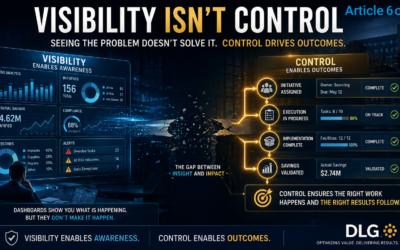
Visibility Isn’t Control: The Missing Layer in Healthcare Operations
As healthcare organizations work to improve performance, one of the most common areas of investment is visibility. Dashboards are implemented, reporting capabilities are expanded, and leadership gains greater access to data across the organization. These efforts are...

From Value Analysis to Margin Strategy: A CFO’s Perspective
Value analysis has long been a critical function within healthcare organizations. Traditionally, it has been viewed as a process focused on evaluating products, assessing clinical impact, and supporting informed purchasing decisions. While these responsibilities...

Approval Is Not the Finish Line – Implementation Is
One of the most common misconceptions in healthcare value analysis is the point at which success is defined. Often, in many organizations, the moment an initiative is approved is treated as a milestone of completion. The analysis has been conducted, stakeholders are...

Why Most Cost Savings Initiatives Fail Before They Start
In the previous article, we explored how the governance gap limits an organization’s ability to realize savings, even after strong decisions have been made. That naturally leads to a deeper question: why do so many initiatives struggle before they ever reach...

The Hidden Governance Gap Costing Health Systems Millions
Healthcare organizations today are not short on cost-saving initiatives. Across the industry, health systems are actively identifying opportunities, evaluating products, and making informed decisions through established value analysis processes. Committees are...

Flagship Article for Governance and Operating
You Approved the Savings. Why Didn’t You Get Them? Healthcare organizations today are not short on cost-saving initiatives. Across the industry, health systems are actively identifying opportunities to reduce spend, standardize products, and improve supply chain...

How Data Leverage Group Supports Healthcare Value Analysis
At Data Leverage Group, we understand the complexity of healthcare value analysis. Our Healthcare Value Analysis Software is designed to streamline workflows, provide actionable insights, and support committees in making evidence-based, cost-conscious decisions.